






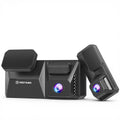
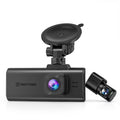
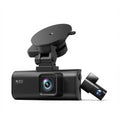
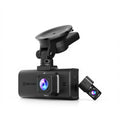
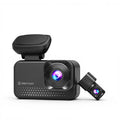
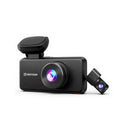
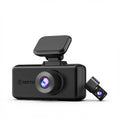
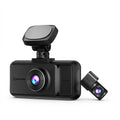







Why New Drivers Are the Most Vulnerable on UK Roads
Passing your driving test is a milestone, but the statistics that follow are sobering. Around 21.6% of new drivers in the UK are involved in an accident during their first year behind the wheel, and that figure climbs to 26.1% among 18 to 24-year-olds. Provisional licence holders cause 12% of all reported collisions despite making up just 4% of licensed drivers.
In 2025, 1,556 people were killed on Great Britain's roads and 29,911 were killed or seriously injured. New drivers are disproportionately represented in those numbers. They are also prime targets for 'crash for cash' fraudsters, who assume younger, less experienced motorists won't have evidence to fight back.
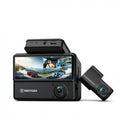
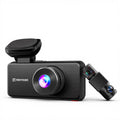
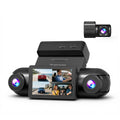
The financial reality compounds the risk. The average car insurance premium for a 17-year-old hit £2,877 in 2025. A single disputed at-fault claim can wipe out a no-claims bonus you've barely started building. A front-and-rear GPS dash cam is not a gadget or an accessory; it's a legal and financial safety net you should fit the moment you pass your test.
Front-Only vs. Front-and-Rear: Why the Rear Camera Is Non-Negotiable
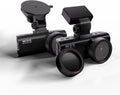
Rear-end collisions are the most common collision type on UK roads. A forward-facing camera alone leaves your biggest blind spot completely unprotected, and that is exactly the gap fraudsters and careless drivers exploit.
Without rear footage, a shunt from behind becomes a disputed account. The driver behind claims you braked suddenly; you claim they were tailgating. Without video, neither side can prove anything, and the outcome often goes against the newer, less experienced driver.
A rear camera captures following distance, brake lights, and the precise moment of impact. It turns ambiguity into hard evidence. For new drivers, front-and-rear recording is the minimum viable setup, not a luxury upgrade.
When choosing a rear camera, look for at least 1080p resolution, a wide-angle lens (140° or more), and strong night vision performance. You'll be driving in the dark for a significant portion of the UK year, so low-light capability matters far more than you might expect.
Why GPS Recording Changes Everything
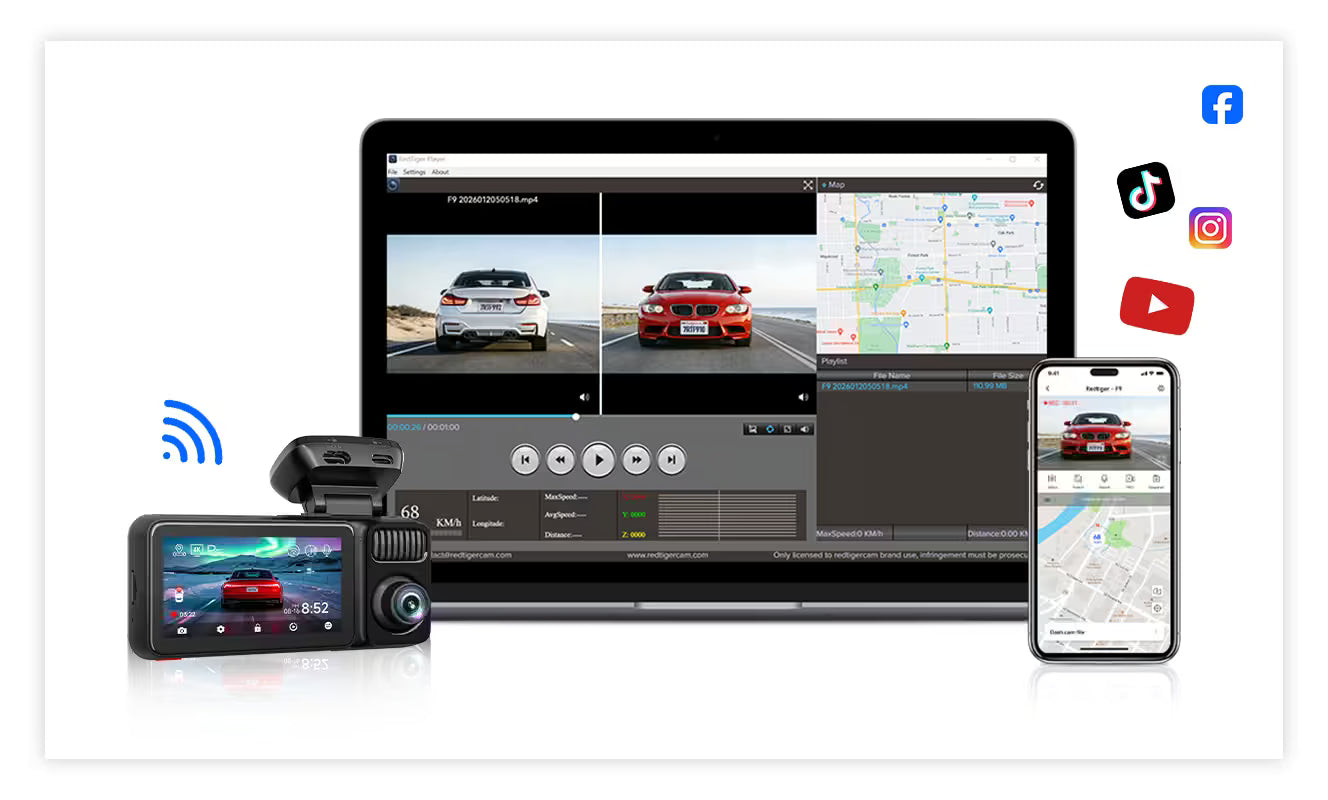
Video footage tells you what happened. GPS data tells you exactly where, when, and how fast. A GPS-enabled dash cam embeds speed, precise coordinates, and timestamps directly into every frame of footage, creating a forensic record that is extremely difficult to dispute.
This matters because 72% of UK insurers now prefer digital dash cam evidence over witness statements when processing claims. GPS-embedded footage can reduce claim resolution from weeks or months to hours or days, because claims handlers can make immediate, evidence-based decisions rather than waiting for conflicting accounts to be investigated.
GPS data is also increasingly decisive in UK court proceedings, going well beyond what video alone can provide and giving judges and magistrates a verifiable, objective timeline of events.
It is worth being clear about one thing: GPS data works both ways. If you were driving within the speed limit, it proves your innocence conclusively. If you were speeding, it will show that too. This is a good thing. It keeps you accountable and encourages the disciplined driving that keeps you safe and your insurance costs down.
What Makes Dash Cam Footage Legally Admissible in the UK
UK courts accept dash cam footage in both civil and criminal proceedings, but only if it meets specific criteria. The footage must be unedited, meaning no cuts, filters, or alterations. It must have accurate timestamps, which is where GPS synchronisation becomes invaluable. And there must be a clear chain of custody, so the file can be traced from your camera to the court without any gaps.
One critical mistake to avoid: do not post footage to social media before submitting it to your insurer or the police. Sharing clips publicly can compromise admissibility and weaken your position in a dispute.
When submitting footage to an insurer, always provide the original, unedited file directly from your SD card. A screen recording or a clip filmed on your phone pointing at a laptop screen will not carry the same evidential weight.
If you capture dangerous driving by another road user, the National Dash Cam Safety Portal (NDCSP) allows you to submit footage directly to your local police force. The portal received 24,000 dangerous driving submissions in just the first half of 2024, with over 135,000 clips uploaded in total. It is a straightforward process that new drivers should know about from day one.
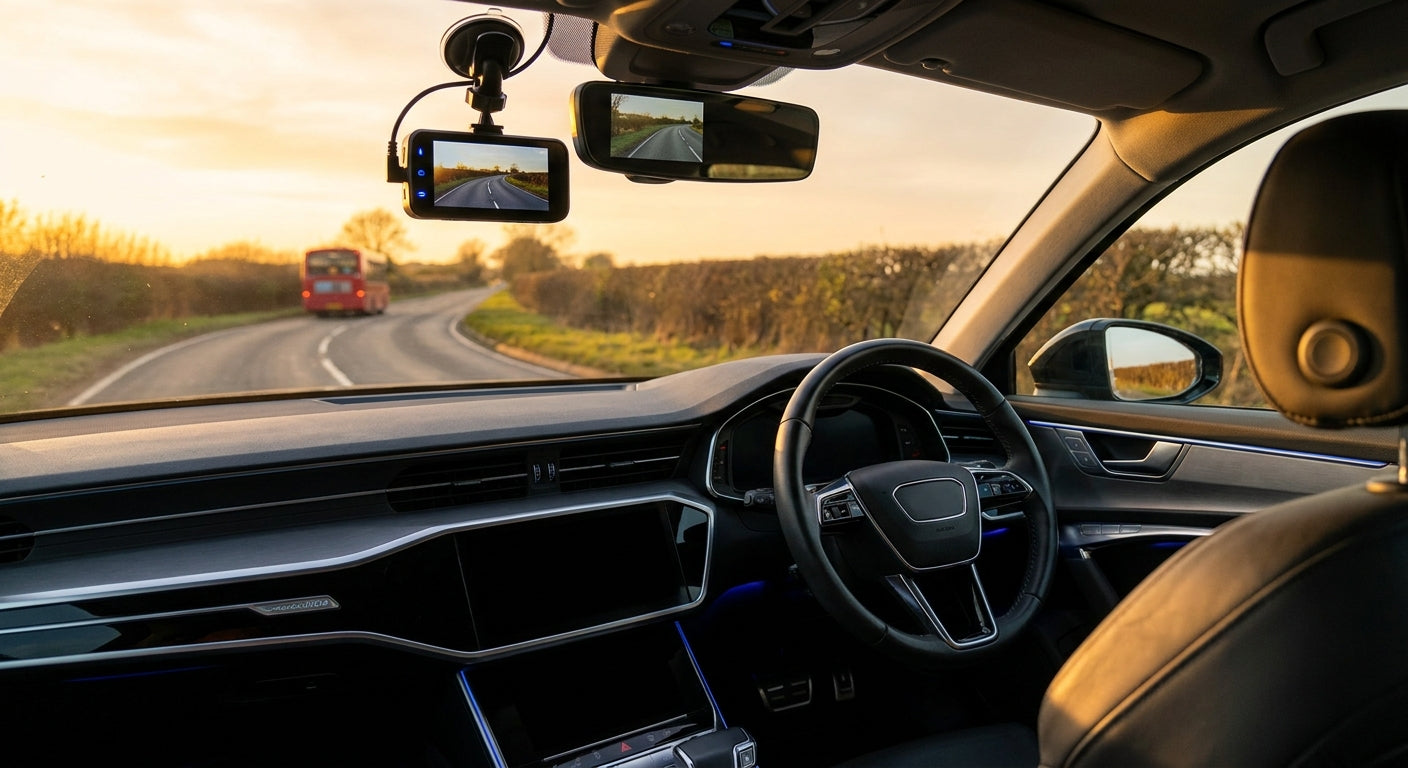
One legal requirement to remember: UK law requires your dash cam to be mounted so it does not obstruct your view. The recommended position is behind the rear-view mirror. This is a legal obligation, not merely a suggestion.
The Financial Case: Insurance Discounts and NCB Protection
Several major UK insurers, including Admiral, Direct Line, and Aviva, offer up to 15% premium reductions for drivers with dash cams fitted. Specialist insurers go further, with discounts reaching as high as 25%.
To put that in real terms: a 17-year-old paying £2,877 per year would save over £430 with a 15% discount. That saving alone covers the cost of a quality front-and-rear GPS dash cam. The camera effectively pays for itself before you've finished your first year of driving.
The no-claims bonus argument is even more compelling. As a new driver, you're building your NCB from scratch. Every claim-free year brings your premiums down significantly. One disputed at-fault claim, particularly one you weren't responsible for but cannot prove, resets that progress entirely. Dash cam footage is your NCB insurance policy.
'Crash for cash' scams cost the UK insurance industry over £1.1 billion annually. New drivers are prime targets because fraudsters assume they lack evidence. Around 40% of dash cam owners have already captured a crash or incident on their device. The risk is not hypothetical; it is a matter of when, not if.
Dash Cams as a Self-Coaching Tool for New Drivers
A dash cam does more than record incidents. Research from the RAC Foundation shows that young drivers demonstrably improve their behaviour when they know footage can be reviewed by parents or insurers. Knowing the camera is running encourages better habits: smoother braking, more consistent mirror checks, and greater awareness of speed.
Parking mode with motion detection is another practical benefit. New drivers often park in unfamiliar areas or busy car parks where hit-and-run incidents are common. A dash cam with parking mode captures any impact or suspicious activity around your vehicle, even when you're not in it.
There is a psychological benefit too. Removing the disputed-account anxiety after an incident reduces stress significantly, especially for newer drivers who may already feel anxious behind the wheel. You know the footage is there. You know the truth is recorded.
For parents funding a first car and insurance, a dash cam provides genuine peace of mind. It allows journey reviews when needed and supports the development of safer driving habits, making it a confidence-building tool for the whole family, not just a recording device.
What to Look for in Your First Dash Cam: Key Features Explained
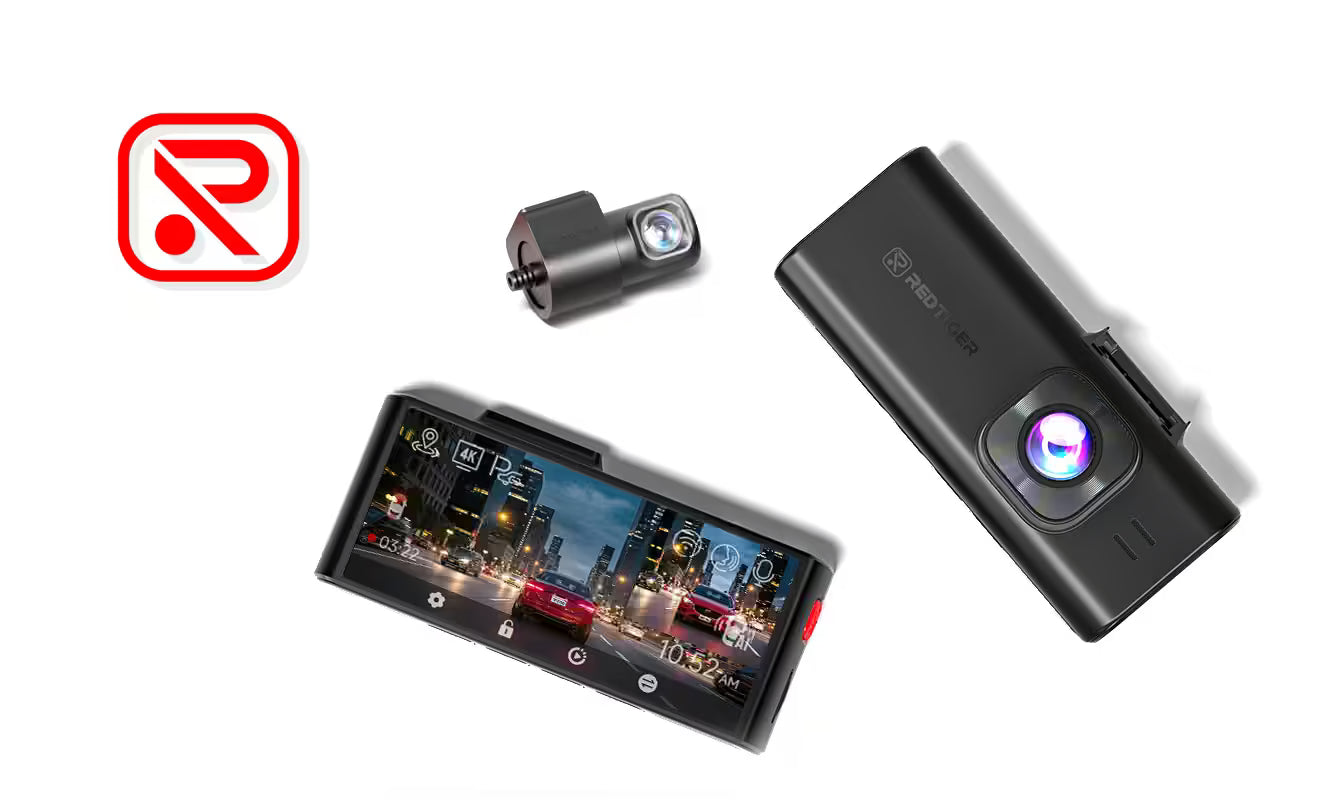
Resolution: 4K front recording captures number plates, road signs, and fine details clearly enough to serve as usable evidence. For the rear camera, 1080p is typically sufficient, since you primarily need to identify vehicles and capture the circumstances of a collision rather than read distant text.
Night vision: Sony STARVIS 2 sensors combined with HDR are the 2026 benchmark for low-light recording. Given that UK winter days can offer fewer than eight hours of daylight, strong night vision is essential, not a bonus feature. Look for cameras recognised for their low-light performance by outlets such as TechRadar and Pocket-lint.
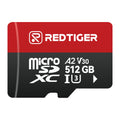
Storage: A 4K dash cam recording in loop mode will use roughly 20 to 30 GB per hour on the front channel. A 128 GB microSD card gives you several hours of continuous recording before the oldest footage is overwritten. Choose a card rated at U3 or V30 speed class at minimum; slower cards will cause recording errors and corrupted files.
WiFi connectivity: Built-in WiFi (ideally WiFi 6 at 5.8 GHz) lets you transfer footage to your smartphone app immediately after an incident, without removing the SD card. This is particularly useful at the roadside when you need to share evidence quickly.
GDPR note for rideshare or taxi work: If you're driving for a platform such as Uber, passengers must be informed they are being recorded. A visible sticker inside the vehicle is the standard approach. Many new drivers overlook this legal requirement, so address it before your first fare.
Your First Dash Cam: The Upgrade That Pays for Itself
The case is straightforward. One in five new drivers has an accident in their first year. 72% of UK insurers prefer dash cam evidence over witness statements. Fraud costs the industry £1.1 billion annually, and new drivers are the easiest targets. A front-and-rear GPS dash cam is not optional; it is a financial shield, a legal tool, and a confidence builder in one device.
A quality setup in the £100 to £200 range delivers protection that far exceeds its cost, particularly when insurance discounts can recoup the purchase price within months.
Redtiger is Amazon UK's number one best-selling dash cam brand, trusted by over 1.7 million drivers across 74 countries. With CES 2026 and Security Today 2025 awards, 4K recording powered by Sony STARVIS 2 sensors, and a 2-year warranty backed by a 30-day money-back guarantee, the range is built with exactly this kind of protection in mind.
If you are a new driver, or buying for one, explore the Redtiger range designed specifically for UK roads. It is one of the smartest investments you will make in your first year of driving.


Leave a comment
This site is protected by hCaptcha and the hCaptcha Privacy Policy and Terms of Service apply.