














Why Your Dash Cam's Spec Sheet Is Designed to Impress, Not Inform
Every number on a dash cam spec sheet is technically accurate. That does not mean it is useful. Manufacturers choose which figures to highlight and which to bury, producing a document engineered to impress rather than inform.
The UK dash cam market is now worth an estimated £280–£350 million, with over 85% of finished units sourced through ODM/OEM supply chains from Asia. That means dozens of brands may share identical hardware while presenting wildly different spec sheets. Independent spec literacy has never been more important.
This guide maps every major spec line to its actual, real-world impact. By the end, you will know exactly which numbers to scrutinise and which to skip entirely.
The 10 Spec Sheet Numbers That Actually Determine Footage Quality
Below are the ten specs with a direct, measurable effect on real-world dash cam performance. Each opens with a quick verdict so you can skim now and return for detail later.
1. Sensor Model Number (Not Just 'Advanced Sensor')
Verdict: The sensor is the single most important component. If the spec sheet will not name it, walk away.
Resolution, dynamic range, and night performance all flow from the image sensor's physical capability. The key metric is pixel size, measured in micrometres (µm). A 2.9 µm pixel captures roughly four times more light than a 1.4 µm pixel, which translates directly into clearer footage after dark.
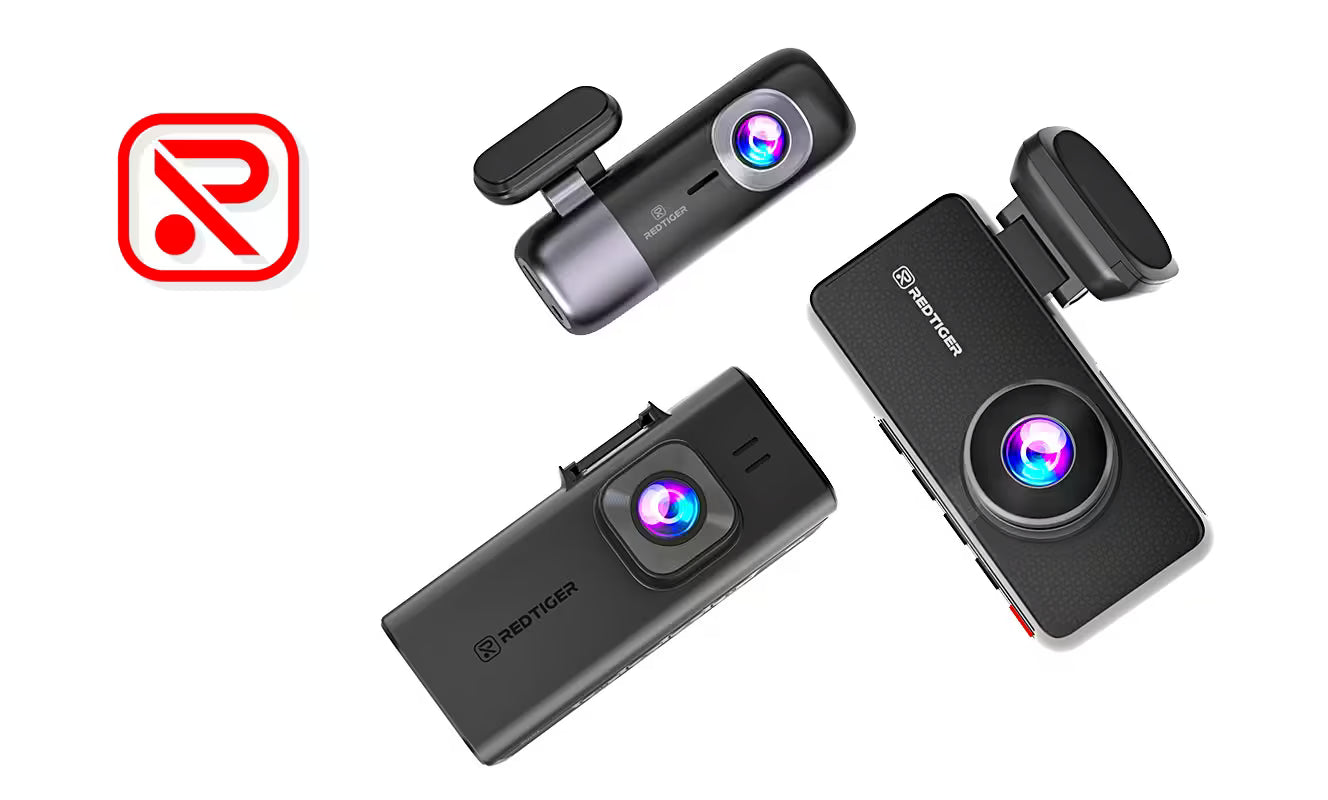
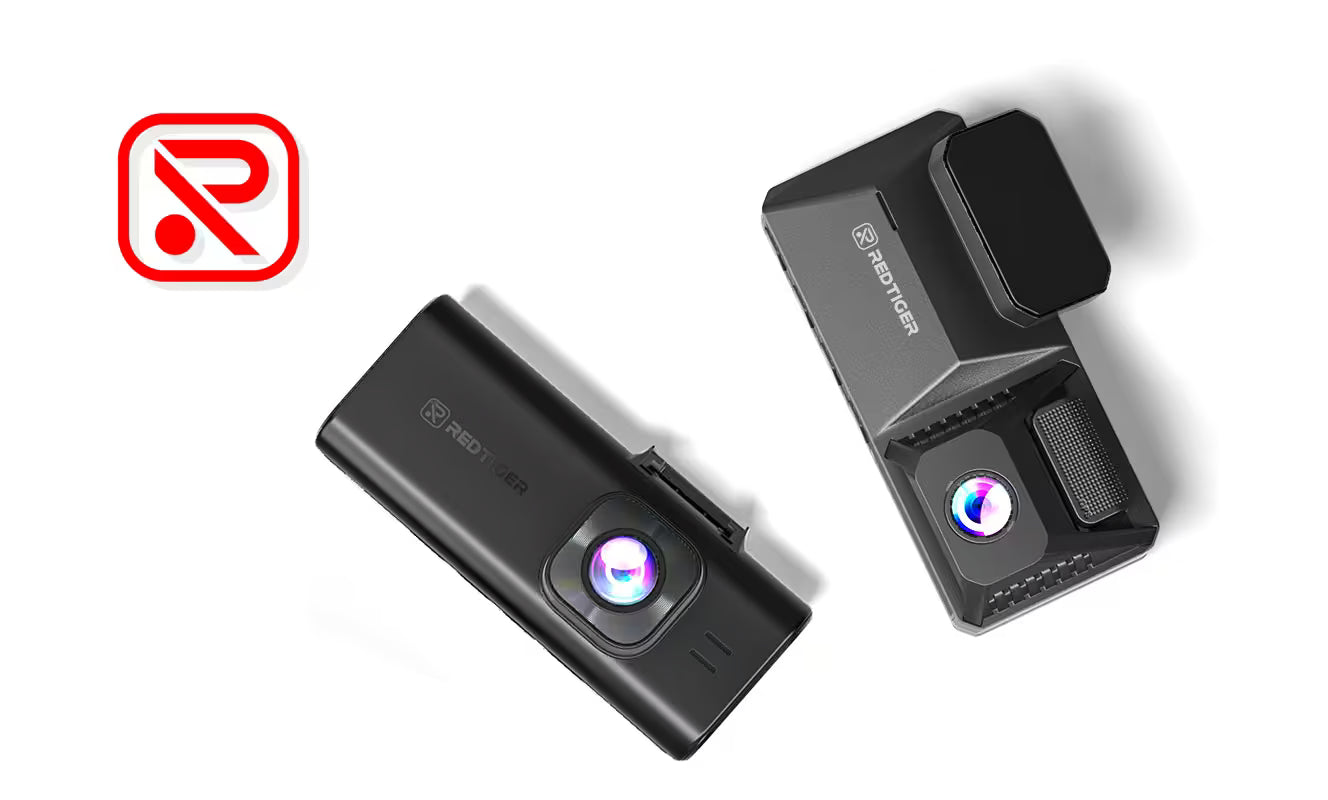
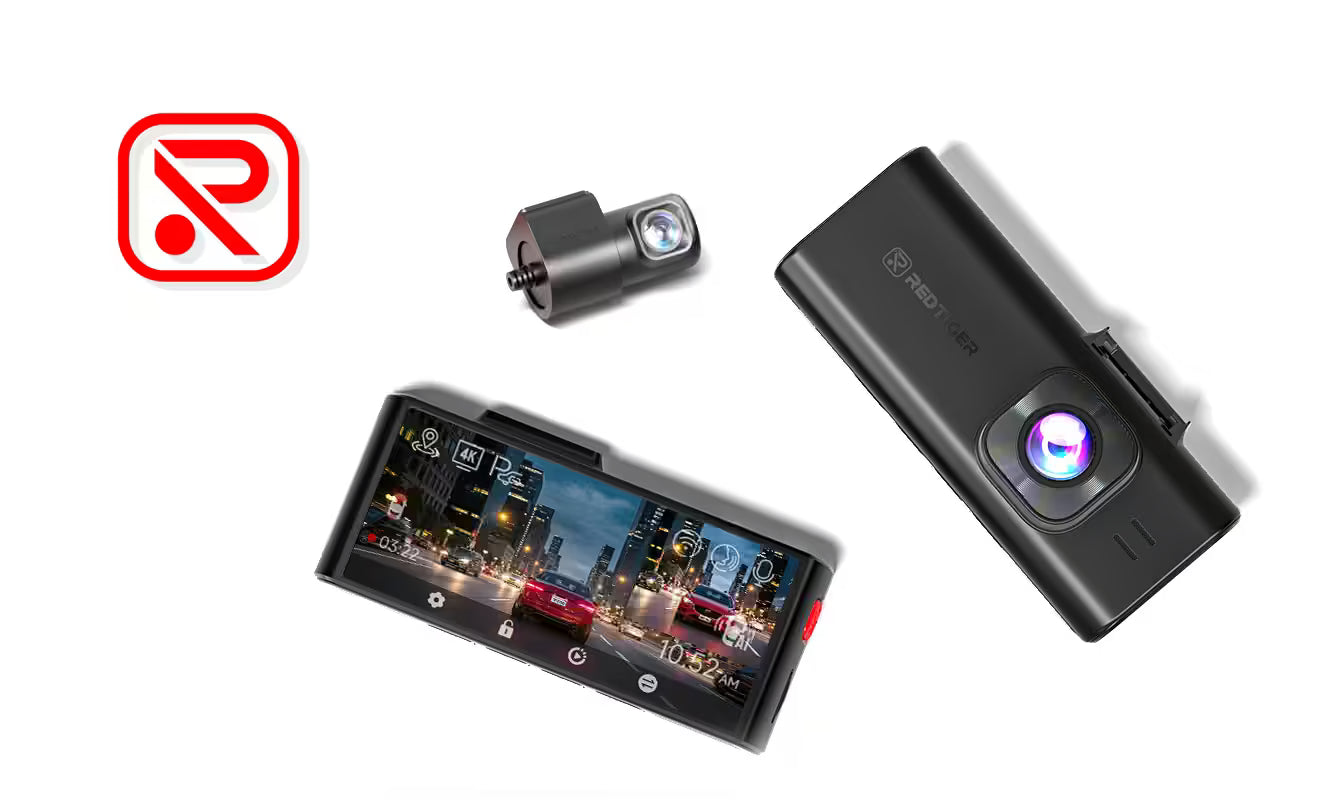
Look for specific sensor model numbers such as the Sony IMX678 or IMX577 (both part of the STARVIS 2 family). Vague claims like "advanced low-light sensor" are a red flag. Redtiger's use of Sony STARVIS 2 sensors is a named, verifiable claim buyers can cross-check before purchasing.
2. Bitrate (Mbps) — The Number That Beats Resolution
Verdict: Bitrate controls sharpness and licence plate legibility more than resolution does.
Bitrate determines how much data the camera writes per second. A 4K camera recording at just 20 Mbps produces mushy, compression-heavy footage. The same sensor at 50+ Mbps looks dramatically sharper.
Here is the counterintuitive reality gaining traction in enthusiast communities: a 2K camera recording at 40 Mbps can outperform a 4K camera at 20 Mbps for reading number plates. The resolution label means nothing if the bitrate cannot support it. Treat any 4K camera listing below 40 Mbps with scepticism, and always look for the Mbps figure in the spec sheet.
3. True Resolution (Pixels, Not Marketing Labels)
Verdict: If the spec sheet says '4K' but does not list 3840×2160, it probably is not 4K.
Genuine 4K records at 3840×2160 pixels. Always verify the actual pixel dimensions rather than trusting the marketing label. Multiple products currently promote "4K Ultra HD" in headlines while documenting 1080p recording in the fine print.
Watch out for phrases like "4K-supported," "upscaled resolution," or plain "HD" without pixel figures. These terms are meaningless. Find the resolution listed as pixel dimensions, or move on.
4. Horizontal Field of View (Not the Diagonal Figure)
Verdict: Diagonal FOV inflates the number. Horizontal FOV is what determines actual road coverage.
Most manufacturers list diagonal FOV because it produces a bigger, more impressive figure. A camera listed at 170° diagonal typically delivers only 130–140° of horizontal coverage, and horizontal is what actually captures lane-change incidents from left to right.
Manufacturers rarely disclose all three axes (horizontal, vertical, diagonal). When no axis is specified, assume diagonal. A practical rule of thumb: horizontal FOV is approximately 80% of the diagonal figure. So a "170° wide-angle" camera likely covers about 136° horizontally. Apply that conversion before comparing models.
5. HDR (High Dynamic Range) — More Impactful Than the 2K-to-4K Jump
Verdict: For UK driving conditions, HDR matters more than the resolution upgrade from 1440p to 4K.
HDR prevents the two most common evidence failures: blown-out sky hiding oncoming vehicles, and pitch-black frames when exiting tunnels into sunlight. If you regularly drive through roundabouts, tunnels, or face low winter sun, HDR is your priority.
A shaky 4K clip with poor dynamic range is less useful to an insurer than a stable 2.7K clip with accurate exposure across the frame. Look for HDR explicitly listed as a recording mode, not just mentioned as a marketing badge on the box.
6. SD Card Speed Class Compatibility (U3/V30 Minimum)
Verdict: The wrong card corrupts your footage. This spec is almost never mentioned, and that is a problem.
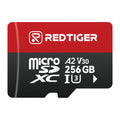
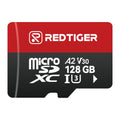
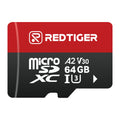
Any dash cam recording at 20 Mbps or above requires a U3/V30-rated microSD card with a minimum sustained write speed of 30 MB/s. A slower card causes dropped frames or corrupted files, and you will not know until you need the footage.
Storage context matters too: a 4K camera at 50 Mbps fills a 128 GB card in roughly 5–6 hours. The same card holds 16–20 hours of 1440p footage. Check whether the spec sheet lists a recommended card speed class. If it does not, that silence is itself a warning sign.
7. Parking Mode Type: Buffered vs. Non-Buffered
Verdict: Buffered parking mode captures the impact. Non-buffered captures the aftermath.
Buffered parking mode saves approximately 10 seconds before and 10–20 seconds after a detected event, meaning it records the actual collision. Non-buffered mode wakes up after motion is detected, so the camera may miss the impact entirely due to wake-up delay.
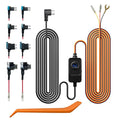
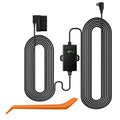
There is a critical hidden requirement here: most dash cams cannot run parking mode from the cigarette lighter socket. Ignition cuts power when you leave the car, so you will need a hardwire kit or a portable battery pack. This limitation is almost never stated on spec sheets and remains one of the most common post-purchase complaints. Ask explicitly before you buy.
8. G-Sensor Sensitivity Range (and Why the Number Alone Is Meaningless)
Verdict: The raw sensitivity figure tells you nothing. Default calibration quality is what matters.
G-sensor sensitivity is adjustable on most models, but spec sheets rarely explain what the settings actually do. Set too high, every speed bump locks a file and eats your storage. Set too low, a real incident may not trigger a protected recording at all.
For UK road surfaces (speed bumps, cobblestones, rural potholes), default calibration is more important than the raw number. Check user reviews that specifically mention false triggers on UK roads. That real-world feedback is far more useful than any figure on the spec sheet.
9. Wi-Fi Standard and Transfer Speed
Verdict: '5 GHz Wi-Fi 6' and '2.4 GHz Wi-Fi' are not the same thing. The spec sheet often hides which one you are getting.
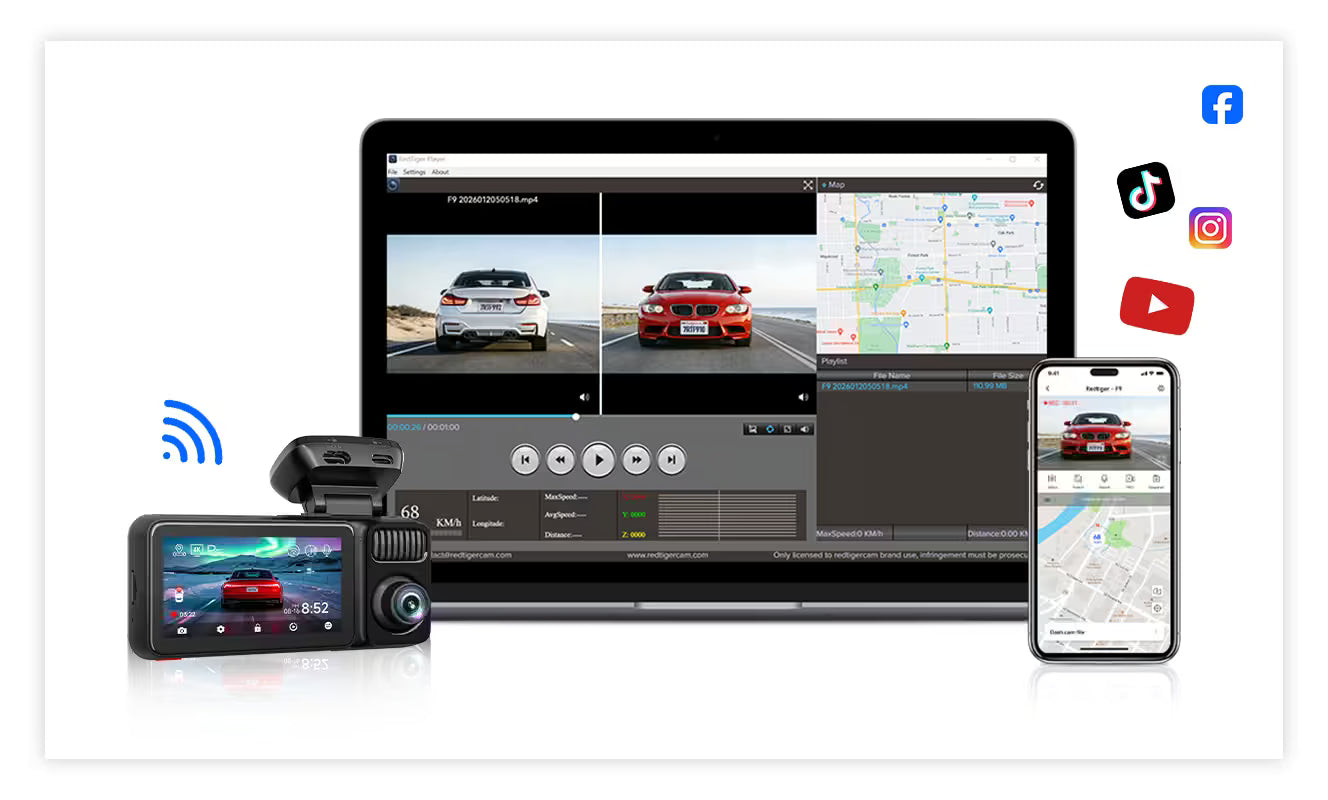
Wi-Fi connectivity determines how quickly you can pull footage to your phone for sharing with insurers or police after an incident. 5 GHz or 5.8 GHz Wi-Fi 6 transfers files significantly faster than older 2.4 GHz standards.
Many spec sheets list "Wi-Fi" without specifying the standard. That vagueness usually means 2.4 GHz. Redtiger's 5.8 GHz Wi-Fi 6 connectivity is a verifiable, testable spec you can confirm the moment you connect your phone.
10. GPS Accuracy and Timestamp Integrity
Verdict: Without GPS, your footage carries less weight with insurers and in court.
GPS metadata embeds speed and location data directly into your footage. This is relevant for insurance claims and legal proceedings where speed at the time of an incident is disputed. Footage with incorrect timestamps can be challenged and potentially dismissed.
Look for GPS listed as built-in, not as an optional accessory. Check whether the spec sheet mentions timestamp synchronisation. A dash cam without GPS still records video, but it provides weaker evidential value for UK insurance claims, even if the image quality is excellent.
The Marketing Figures You Can Safely Ignore
Not every spec sheet figure deserves your attention. Here are the common ones you can skip:
- "Night vision" listed as a feature with no sensor name or pixel-size data behind it. Without a named sensor or µm figure, this claim is unverifiable.
- "AI" features listed without any explanation of what the AI actually does. This typically refers to basic ADAS alerts (lane departure, forward collision warnings), not intelligent recording.
- "HD" without pixel dimensions. This could mean anything from 720p upward.
- "Wide-angle" without a degree figure or axis specification. A vague term that tells you nothing about actual road coverage.
- "4K-supported" or "upscaled 4K". Not the same as native 4K capture at 3840×2160. If the pixel dimensions are not listed, assume it is not genuine 4K.
- Any FOV figure above 160° listed without axis clarification. Almost certainly diagonal, not horizontal.
- Waterproof or temperature ratings listed without an IP standard number. Without a recognised rating, the claim is unverifiable.
If a spec sounds impressive but cannot be independently checked, it is marketing copy, not engineering data.
How to Apply This to Your Next Dash Cam Purchase
Before you buy, run through this checklist on the spec sheet:
- Named sensor model (e.g. Sony IMX678)
- Bitrate in Mbps (40+ for 4K)
- Resolution as pixel dimensions (3840×2160 for true 4K)
- Horizontal FOV (or apply the 80% rule to the diagonal figure)
- HDR listed as a recording mode
- U3/V30 card compatibility stated
- Parking mode type (buffered, with power requirements explained)
- G-sensor adjustability confirmed
- Wi-Fi standard specified (5 GHz / 5.8 GHz vs. 2.4 GHz)
- Built-in GPS with timestamp synchronisation
A spec sheet that hides or omits these figures is itself a signal about product quality and brand transparency. Independent reviewers at outlets including TechRadar, Autoblog, and Pocket-lint consistently find that spec-sheet claims diverge from tested performance, making third-party reviews a useful shortcut for UK buyers. Redtiger, as the Amazon number-one best-selling dash cam brand trusted by over 1.7 million drivers across 74 countries, publishes verifiable specs across every category on this list.
Knowing these 10 numbers puts you in control. You will spend less time decoding marketing language and more time choosing the camera that actually protects you, your passengers, and your evidence on the road.


Leave a comment
This site is protected by hCaptcha and the hCaptcha Privacy Policy and Terms of Service apply.